
Introduction

When it comes to boosting your fiber intake, many people struggle to eat enough fiber-rich foods. That’s why fiber supplements — especially in the form of gummies or powders — are so popular. But if your goal is fast relief — for digestion, regularity, or gut comfort — does it matter whether you choose gummies or powder? In most cases, the answer is: yes. The form of fiber you take can influence how quickly and effectively it works. Let’s dive into the details.
Fiber Gummies — Pros & Cons
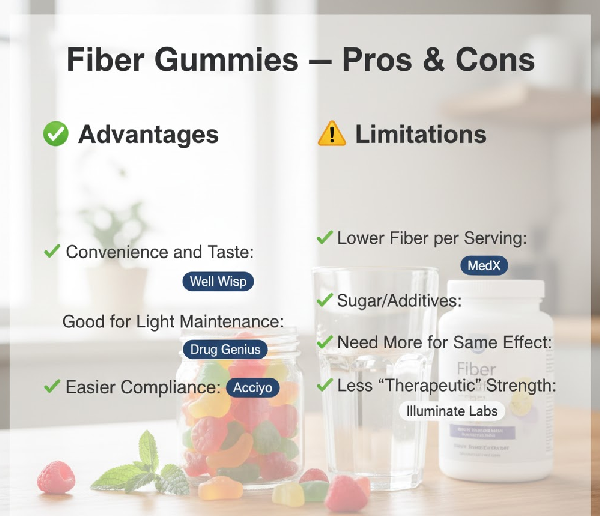
Advantages
- Convenience and Taste: Gummies are chewable, flavored, and easy to take — ideal for those who dislike swallowing pills or drinking thick fiber shakes.
- Good for Light Maintenance: They may help people with mild digestive issues or those just trying to boost fiber moderately.
- Easier Compliance: Because they taste good and are easy to carry, people might stick with them daily — and consistency is key for fiber benefits.
Limitations
- Lower Fiber per Serving: Most gummies provide 2–5 grams of fiber per serving, often less than powder.
- Sugar/Additives: Many gummies include sweeteners, flavors, or fillers — which might offset some health benefits or cause discomfort for sensitive stomachs.
- Need More for Same Effect: To match the fiber of a powder scoop, you might need many gummies — more calories, more cost, and possibly more additives.
- Less “Therapeutic” Strength: For serious issues like constipation or significant gut issues, gummies often don’t deliver enough fiber to be highly effective.
Conclusion for Gummies: Fiber gummies are convenient and great for light to moderate fiber needs, as long as you manage expectations. They’re nice for maintaining regularity and gut comfort — but they might not be “fast” or strong enough for serious digestive issues.
Fiber Powders — Pros & Cons
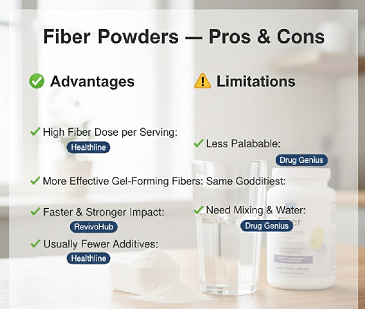
Advantages
- High Fiber Dose per Serving: Powders often deliver 5–15+ grams (depending on type and brand), so a single serving can meet a big portion of your daily fiber needs.
- More Effective Gel-Forming Fibers: Many powders use fibers like psyllium husk that form a viscous gel in the intestines — which helps soften stool and relieve constipation more reliably and thoroughly.
- Faster & Stronger Impact: Because of higher fiber content and gel-forming properties, powders tend to act faster and more effectively (for bowel regularity, stool softening, cholesterol or blood sugar benefits) than gummies.
- Usually Fewer Additives: Many powders are simple — just fiber, no sugar or fillers. That makes them suitable for people watching calories, sugar intake, or managing digestion carefully.
Limitations
- Less Palatable: Some powders have bland taste or grainy texture when mixed, which might deter people from regular use.
- Need Mixing & Water: You must mix powder with enough water (or other liquid) — and hydration is essential. Without enough water, fiber can backfire.
- Less Convenient On-the-Go: Powders require prep (mixing), which may be inconvenient compared to a quick gummy.
Conclusion for Powders: Fiber powders — especially those with psyllium or other viscous fibers — tend to work faster and more powerfully when the goal is real relief (constipation, regularity, gut health, metabolic benefits). But they require mixing and hydration.
Which Works Faster? Fiber Gummies or Powder?
If your priority is fast, strong, therapeutic results — especially for constipation, regularity, or gut clean-up — fiber powder usually works faster and more effectively than gummies. This is because:
- It delivers higher fiber per serving, so your gut receives enough fiber to make a noticeable difference.
- If the powder uses a gel-forming fiber (like psyllium), it helps soften stool, increase bulk, and regulate bowel movements more reliably.
- With proper hydration, the effect tends to appear sooner than with the lower-dose gummies.
On the other hand, if your goal is daily maintenance, mild digestive support, or easier regular fiber intake — fiber gummies may work well for you. They’re slower but more convenient and easier to stay consistent with.
When Gummies Might Be Better Than Powder
Fiber gummies may be the better choice if:
- You dislike the taste or texture of fiber powder.
- You want a mild fiber boost rather than a heavy dose.
- You are traveling, busy, or want a quick, on-the-go option.
- You’re trying to add fiber gradually to avoid gas or bloating.
Tips for Getting the Most Out of Fiber Supplements (Either Form)
- Always drink enough water when taking fiber — at least one full glass, and stay hydrated throughout the day. Without water, fiber can harden and cause blockages or constipation.
- Start slow, especially if you’re new to fiber — increase dosage gradually to allow your gut to adjust.
- Complement with fiber-rich foods (fruits, vegetables, whole grains, legumes) — fiber supplements are helpers, not replacements.
- Check the type of fiber — viscous, gel-forming fibers (like psyllium) often offer stronger digestive support vs. prebiotic fibers that mainly support gut bacteria.
Final Thoughts
- Fiber powder: Faster, stronger, more therapeutic — best when you need real relief (constipation, gut regulation, cholesterol or blood sugar support).
- Fiber gummies: More convenient, palatable, and easier for everyday use — ideal for light fiber support or when you want a simple add-on to your daily routine.
In short — choose based on your health goal. If you want quick, reliable results, go with powder. If you want ease and consistency, go with gummies. And for many people, a combination approach works: powder when you need stronger results, gummies for everyday maintenance.